THE LOGS
LOG 010.6: Connecting Nine to Azure DevOps — and Getting Credential Custody Right
This is Part 6 of the Nine / 9OS series. Part 5 closed the original arc: Nine online, operating inside the Paragon9 M365 environment with a locked identity, a SharePoint Command Deck, and four Teams channels enforcing the direction of work. That was supposed to be the final entry.
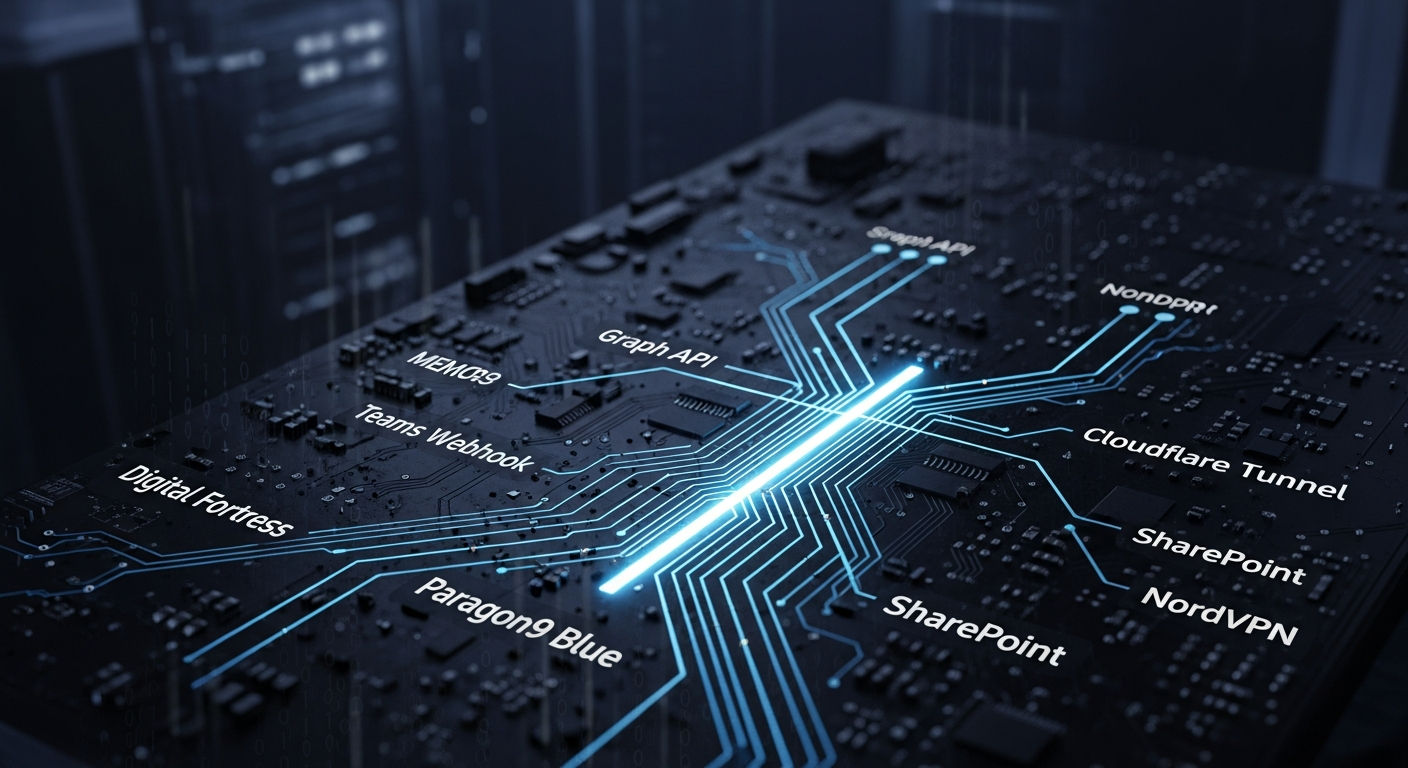
LOG 010.5: Connecting OpenClaw to Microsoft Graph and Bringing Nine Online
This is Part 5 of the Nine / 9OS series — the final entry. Parts 1–4 built the infrastructure foundation, the M365 identity layer, and the 9OS workspace. This entry wires everything together: Graph API access, Nine's identity file, confirmation that the inbound webhook delivery via Cloudflare Tunnel (built back in LOG 010.2) is still live, and the live end-to-end test that confirms Nine is operational inside the Paragon9 M365 environment.

LOG 010.4: Building the SharePoint 9OS Command Deck and Teams Channels
This is Part 4 of the Nine / 9OS series. Part 3 built the identity layer — the M365 account, NordVPN dedicated IP, and Conditional Access policy. This entry builds the workspace: the SharePoint site Nine operates from, the Teams command channels, and the naming architecture that makes the whole system coherent and scalable.
LOG 010.3: Setting Up a Dedicated M365 Identity for Nine
This is Part 3 of the Nine / 9OS series. Part 1 covered standardizing OpenClaw as a headless systemd service on a minimized Ubuntu Server. Part 2 covered connecting it to Microsoft Teams. This entry builds the identity layer — the M365 account, the dedicated static IP, and the access controls that lock Nine to exactly one machine.

LOG 010.2: Connecting OpenClaw to Microsoft Teams on a Headless Linux Server
This is a companion entry to the Nine / 9OS series. The series up to this point established the systemd service topology and the M365 identity layer. This entry builds the bot infrastructure: the Azure App Registration, the Cloudflare Tunnel for inbound webhook delivery, and the Teams app manifest that brings OpenClaw online as a bot you can DM and channel-message from anywhere in your tenant.
LOG 010.1: Architecting a Headless AI Bridge — Standardizing OpenClaw under Systemd
This is Part 1 of the Nine / 9OS series. This entry builds the infrastructure foundation: standardizing OpenClaw as a headless systemd service on a minimized Ubuntu Server — OS installation choices, dual-service topology, a PTY workaround for Crestodian's terminal check, persistent gateway lingering, and cross-device bridging. The complete path from bare metal to a production AI Bridge running in the dark.
LOG 010: Building Nine — A Headless AI Agent Operating Layer for Paragon9
There is a small loop built into this project that I appreciate. The agent started as `Agent9` — a working concept, a placeholder. It got shortened to `9` the way all working names do when you're moving fast. Then, for readability in Teams conversations and audit logs, it lengthened itself back out into `Nine`. And when the typography wants to have a little fun: `N9ne`.

LOG 009: The Reconstruction Protocol
Ownership is the only true security. In March 2026, my physical hardware suffered a critical failure—a second high-impact motorcycle accident resulting in a shattered wrist. While I was processed through emergency care and surgery, the architecture of my life remained at 100% uptime
LOG 008: The Recovery Architecture
Six weeks ago, hardware failures (my left elbow, hand, and wrist) took me offline. In 2020, it was my left tibia. In 2021-2022 it was the devastating loss of my father, uncles, and brother-in-law. In 1996, it was my freedom. Most people see a "Total Loss" as a reason to quit. I see it as a mandatory System Audit.
LOG 007: Legacy as Infrastructure
We lost my father in 2022, right in the middle of the 2nd wave of COVID and just two months after my first daughter was born. Two months before she was born, I had just lost my brother-in-law and uncle to the same virus.
LOG 006: Constraint as Architecture
Most systems are built assuming ideal conditions. That is the flaw. The most durable systems are built under: - time constraints - resource constraints - environmental constraints Constraint is not a limitation. It is a design parameter.
Log 005: Total Loss as System Audit
Failure is not an exception. It is a test condition. When a system experiences total loss: - physical - operational - organizational The system reveals its true architecture.

LOG 004: Access Anywhere
As the world shifted toward a "mobile-first" reality, we transitioned from Web to Native architectures and Modern CMS deployments. The goal was simple: Access Anywhere, on Any Device. We were preparing for a world where the office was no longer a physical location, but a secure login.
LOG 003: The Secure Protocol
Building a "Compliance Engine" requires a fortress-level approach to data integrity. In the SecureClose build, we synchronized audio, video, and e-signatures across kiosks, tablets, and a central Command Center. We leveraged Azure’s cloud infrastructure to create a single "Source of Truth" for every transaction. This wasn't just a website; it was a secure, multi-node communication platform.
LOG 002: The Data Fortress
In the early 2010s, most businesses were running critical operations on disconnected Excel sheets. They were plagued by redundant data, a lack of traceability, and zero validation. I architected systems to migrate these fragile spreadsheets into robust Web Apps. By implementing Permission-based Security and Disconnected Validation, we ensured data was not just accessible online but protected against unauthorized entry and accidental loss.
LOG 001: The Modernization Shift
My earliest work at Paragon9 centered on a fundamental truth: Legacy systems aren't just old; they are expensive. During this era, we focused on MS Access Migrations and Legacy Rewrites. We took fragmented, localized databases and turned them into stable, modernized applications.
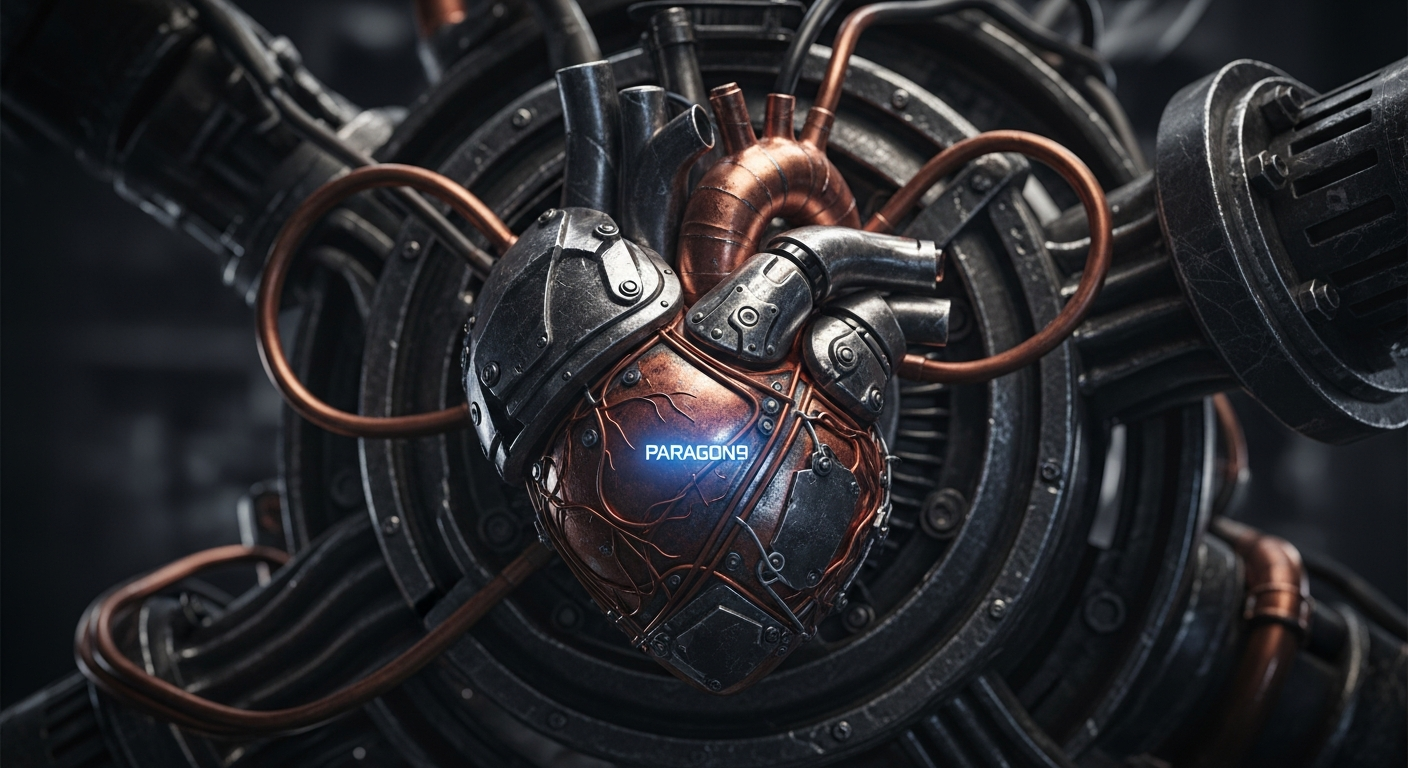
Log 000: The Genesis Protocol
On February 14th, 2007, I formalized a vision. While the tech world was bracing for the launch of the first smartphone, I was focused on a different kind of architecture: the formation of Paragon9, LLC. Founding a firm while navigating the final stages of an intensive academic track wasn't a choice made for convenience; it was a choice made for stability. I realized early on that to build a legacy, I needed a vehicle that I owned entirely.